
Facing Your Grief
A mask workshop
What if your grief had a face? And you could finally look it in the face?
At a glance
- Duration
- 5 hours, 10 am to 3 pm, in a small group (at most 8 people)
- Language
- German and English
- Price
- €145
- Included
- Lunch, coffee, tea, cold drinks, snacks and all materials
- Place
- Casa Coco in Kleinmachnow
- Dates
- None planned yet. I announce new dates in the newsletter.
Why masks
“You have to face your grief.” You hear that sentence all the time after a loss. But what does it actually mean? Face it, look it in the face. Only grief has no face.
So Swantje and I took the sentence literally. What if we build our grief a face? Would that actually be a mask? A mask hides something. But we want it to show something.
Read more
And that’s where it gets interesting. Because in grief we wear a mask all the time. At work, at the supermarket, when someone asks how we are. We put it on so the grief disappears behind it. In this workshop we turn that around. This time it’s not you wearing the mask, but your grief. It gets its own face, a figure, a character. And then it stands opposite you, and for the first time you can really look it in the face.
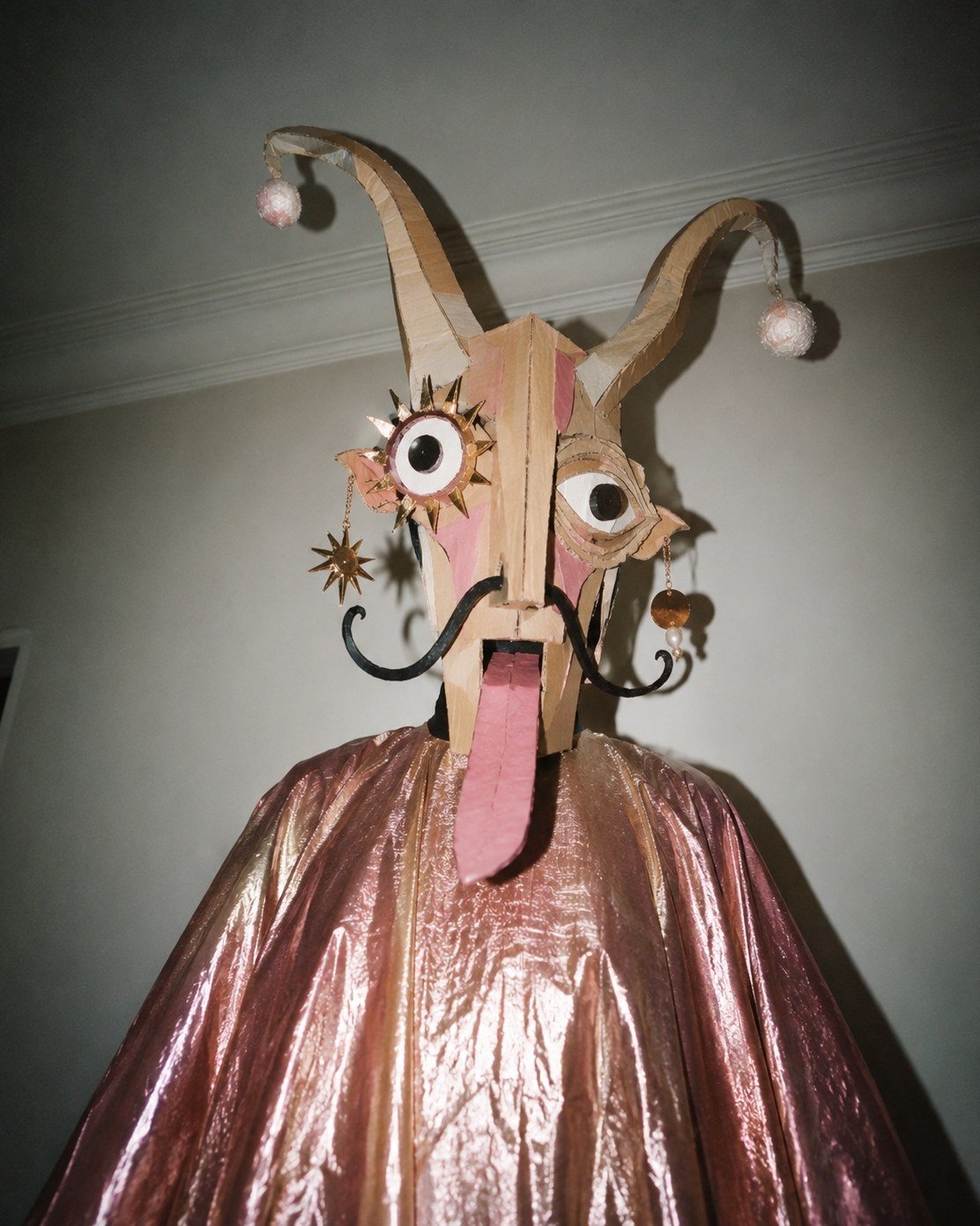
Is your grief a creature that follows you everywhere? Does it lie on your bed and refuse to leave? Does it have horns? Or excellent taste?
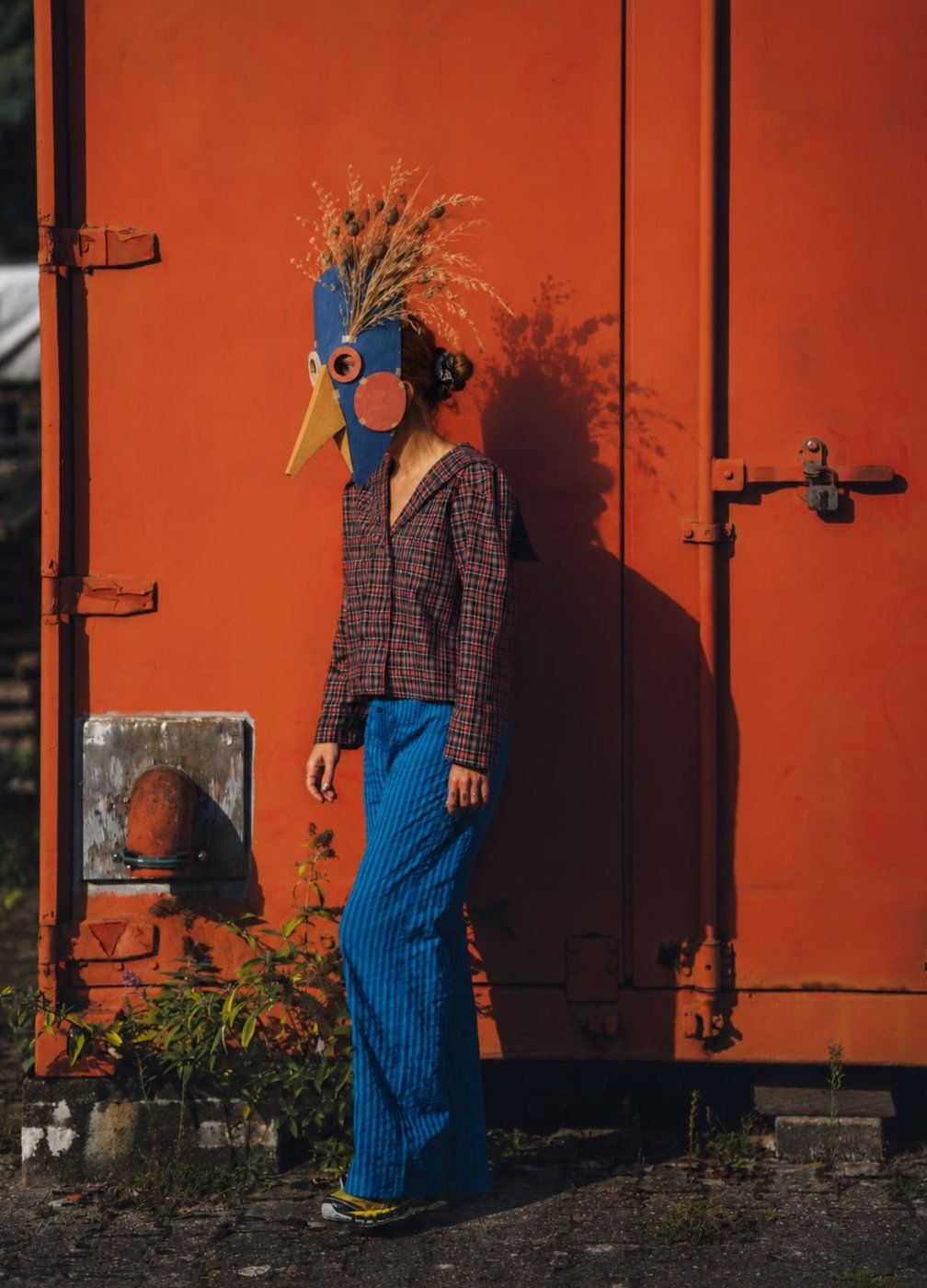
Doing this together makes it even more alive. Suddenly there is a monster standing next to you. Next to it a dragon, a bird, a creature with horns.
These aren’t masks that disappear into a box afterwards. We want to make them so beautiful that they become objects in their own right. Something you hang on the wall and live with. You look at it, put it on, maybe even talk to it. A tangible form for something that has long been part of your everyday life anyway.
What we do
We start by diving into the world of masks: what they hide, what they show, and how people have used them across all cultures and times.
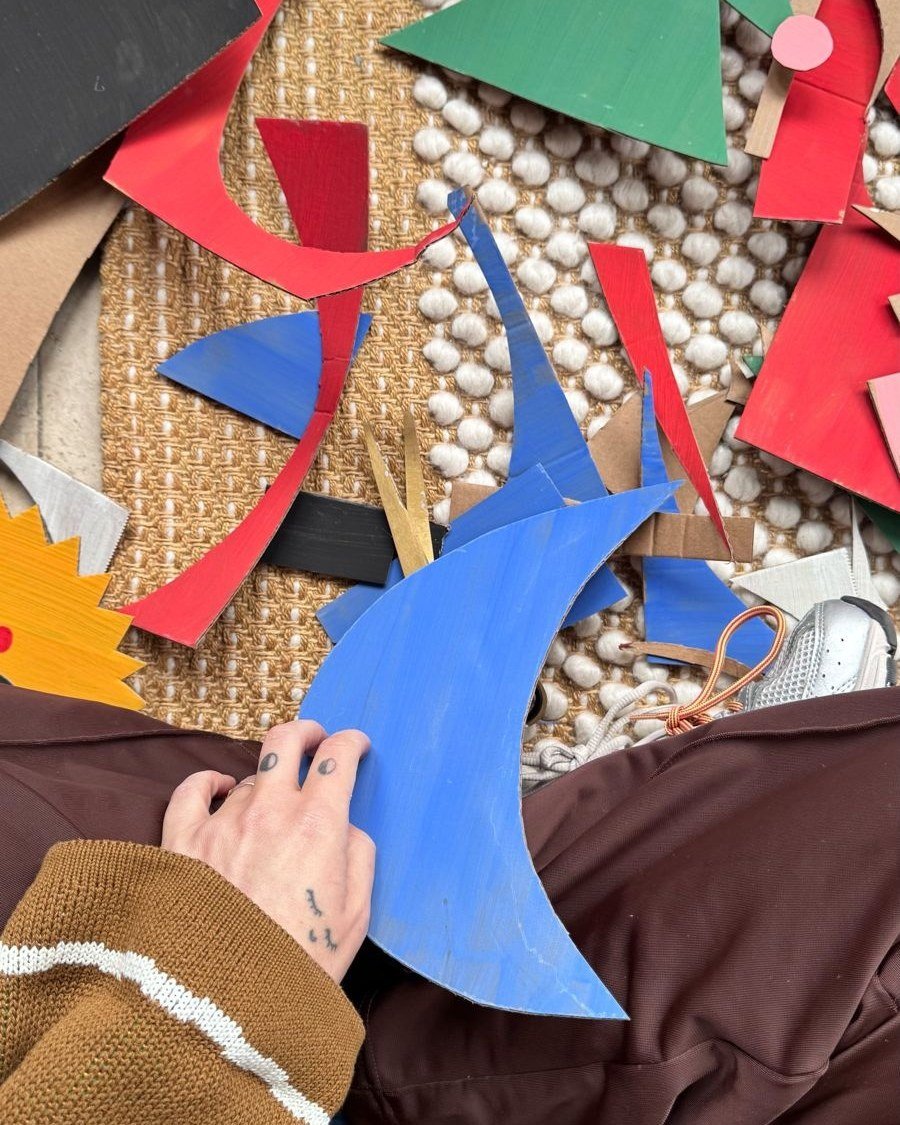
Then we paint. Everyone paints a few pieces of cardboard in colours that feel right. While the paint dries, we have lunch together.
Read more
After that, Swantje shows you step by step how to build your mask, inside the house or out in the garden. What should your mask express? You find a shape and try things out, with paper, fabric, tape, grasses and twigs. Cutting, folding, gluing, tearing off again, starting over.
To finish, we all sit down at the table with our masks and let them talk to each other. You don’t need to know in advance what you want to make. We guide you step by step.
With whom
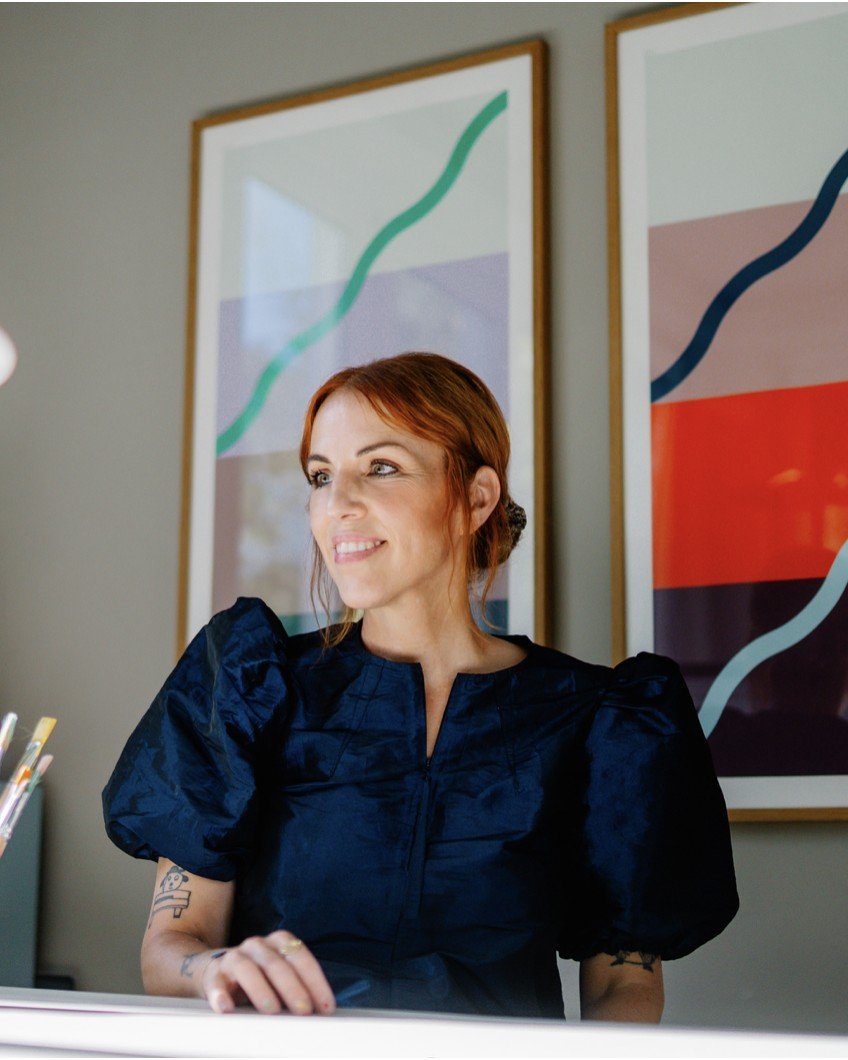
Swantje Hinrichsen has seen faces and figures in the things around her all her life. She builds, draws and plays with materials until they start to speak. In this workshop she helps you give your grief a face, a body and maybe even a voice.
Voices
“Is my grief loud? Is it angry? Does it have a dark side? How complicated is it, how many-sided? Can I make friends with it? I think my grief is actually a whole group of people.”
Anna
“I thought my mask would be sad. But it turned out very loud and a bit angry too. That really surprised me. How much anger there simply is in my grief.”
Jelle
“My mask is actually pretty ugly. Crooked eyes, grass for hair. But that’s exactly how it feels right now. Somehow I like it, precisely because of its ugliness.”
Jenny
“I asked myself whether I could be friends with my grief. I think our relationship is complicated. Now it hangs on my wall and looks at me. Sometimes I say hello to it. And sometimes it says hello back.”
Francesco
“It was something very special to be together in that room. We built things, laughed and talked about things we don’t usually talk about. It felt surprisingly light and natural.”
Eli